4 years

Bachelor of Medical Laboratory Science (BMLS)

Affiliated to Rajiv Gandhi University of Health Sciences, Bengaluru
Approved by Govt. of Karnataka

COURSE OVERVIEW

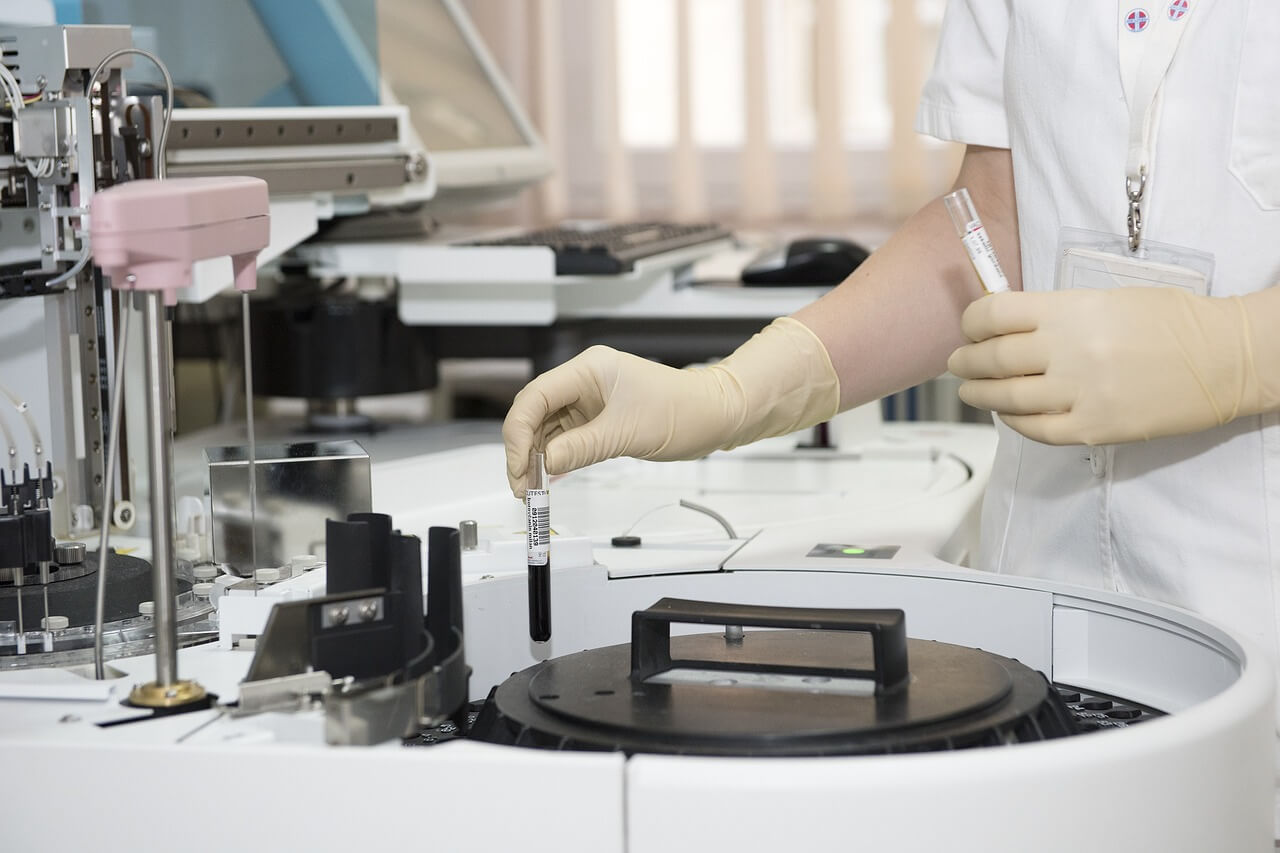
Bachelor of Medical Laboratory Science (BMLS) is an undergraduate degree program designed to prepare students for a professional career in clinical laboratory science, which plays a critical role in diagnosing, treating, and monitoring diseases. The course is designed to be of 4 years duration (including one year compulsory internship). The course combines theoretical knowledge with practical training in hematology, microbiology, biochemistry, and immunology, enabling graduates to operate advanced laboratory equipment and analyze bodily fluids, tissues, and samples.

Medical Laboratory Science is the branch of science that deals with clinical laboratory investigations performed on patient samples for the diagnosis of diseases. Blood, tissues, and various body fluids are analyzed and examined to detect infections, foreign organisms, and other abnormalities. The results generated from these laboratory investigations provide critical information that assists the medical team in making informed decisions regarding patient care. In fact, approximately 60–70% of all medical decisions are based on clinical laboratory investigation reports.

Medical Laboratory Science holds a vital position in the field of medicine. In every system of healthcare, accurate diagnosis is the first and most essential step, as effective treatment cannot begin without identifying the underlying cause of illness. Medical Laboratory Technologists play a crucial role in this process by applying scientific methods, advanced instruments, and specialized techniques to produce precise and reliable results.

In today’s technologically advanced world, the diagnosis, treatment, and prognosis of diseases heavily depend on laboratory findings. These professionals therefore serve as key contributors to the healthcare system. Over the past few decades, Medical Laboratory Science has significantly advanced the field of medicine by improving the accuracy and efficiency of disease detection. As modern healthcare increasingly relies on a multidisciplinary approach, the Medical Laboratory Scientist or Technologist has become an integral and indispensable member of the medical team.

Scope of practice

The scope of practice for a Medical Laboratory Science Professional encompasses a wide range of responsibilities related to the collection, preparation, analysis, and interpretation of biological samples to aid in the diagnosis, treatment, and monitoring of disease.

  1. Sample Collection and Handling
  • Collect blood, urine, stool, sputum, and other body fluids following proper protocols.
  • Label, store, and transport specimens safely to avoid contamination or degradation.
  1. Laboratory Testing and Analysis
  • Perform tests in key laboratory disciplines:
  1. Haematology (e.g., CBC, ESR, coagulation studies)
  2. Clinical Chemistry (e.g., liver/kidney function tests, blood glucose)
  3. Microbiology (e.g., culture & sensitivity, Gram staining)
  4. Immunology and Serology (e.g., HIV, Hepatitis, CRP)
  5. Transfusion Medicine (e.g., blood grouping, cross-matching)
  6. Histopathology/Cytology (e.g., tissue processing, slide preparation)
  7. Molecular Diagnostics (e.g., PCR, RT-PCR, gene mutation testing)
  8. Instrumentation and Technology
  • Operate and maintain laboratory equipment such as analysers, microscopes, centrifuges.
  • Calibrate, troubleshoot, and ensure quality control of instruments.
  • Use Laboratory Information Systems (LIS) for data entry and reporting.

Duration of the programme

4-year program (including 1 year of compulsory internship (Laboratory rotation /Research dissertation)

ADMISSION TERMS AND CONDITIONS

  • Age Limit: Candidates are typically required to be at least 17 years old by December 31st of the admission year. The maximum age limit for admission shall be 35 years
  • Minimum Educational Qualification

The candidate must have passed Higher Secondary (10+2) or equivalent examination recognized by any Indian Board or a duly constituted Board or National Open School with at least 50% marks in aggregate of physics, chemistry and biology (Botany & Zoology).

Candidates are also eligible from State Open School recognized by state Government and National Institute of Open School (NIOS) recognized by Central Government having Science subject and English only

  • Color blind candidates are eligible provided that color corrective contact lens and spectacles are worn by such candidates
  • Candidates shall be medically fit
  • Married candidates are also eligible for admission
  • Students shall be admitted once in a year
  • Reservation policy:
  • Seats are reserved for candidates belonging to specific categories as follows:

Scheduled Castes (SC): 15% of the total seats.

Scheduled Tribes (ST): 7.5% of the total seats.

  • Other Backward Classes (OBC-NCL): 27% of seats reserved for Non-Creamy Layer candidates, based on the central list.
  • Economically Weaker Section (EWS): 10% of seats are reserved for candidates from the General category with an annual family income of less than ₹8 Lakh.
  • Persons with Disability: 5% horizontal reservation is applicable across all categories (General, EWS, OBC, SC, ST) for candidates with 40% or more benchmark disability

Candidates belonging to SC/ST/OBC (NCL) categories are granted a relaxation of 5% in the minimum aggregate marks required in 10+2 (Physics, Chemistry, Biology).

  • General Category: Minimum 50% in PCB.
  • Reserved Category: Minimum 45% in PCB.

RAGIV GANDHI UNIVERSITY OF HEALTH SCIENCES, BENGALURU (RGUHS)

RGUHS is the affiliating university responsible for setting academic standards, curricula, examinations and overall regulations for Allied health science courses. RGUHS ensures academic quality, regulatory compliance, and degree issuance for Degree.

MLS course across Karnataka. All admissions are subject to eligibility conditions of Rajiv Gandhi University of Health Sciences. Eligibility certificate will have to be obtained from Rajiv Gandhi University of Health Sciences, Bangalore.

REQUIRED DOCUMENTS FOR ADMISSION

  • Seven copies of recent photographs (Passport size)
  • The following original certificate shall be retained by the college for issues of University enrolment number:
  1. 10th standard pass certificate for proof of date of birth (Original +3 attested copies)
  2. 12th standard marks card / pass certificate (Original +3 attested copies)
  3. Transfer certificate from the last institute attended
  4. Conduct certificate
  5. Migration certificate from board / university of the institute last studied
  6. Certificate pending to claims of reservations
  7. Eligibility certificate (Non-Karnataka candidates)
  8. Copy of certificate for proof of residence like Aadhar card/ Electricity Bill/ driving License

CURRICULUM OUTLINE

 SEMESTER  SUBJECTS
Semester I Human Anatomy

Human Physiology

Fundamentals of the Healthcare

System and Medical Laboratory

Science (MLS)

Communication and

Professionalism

Basic Emergency care and First

aid

Basics of Computer Application

Human Anatomy practical

Human Physiology practical

Semester II Fundamentals of Microbiology

Basics of Biochemistry

Fundamentals of Haematology

Preventive and Social Medicine

Fundamentals of Microbiology

Practical

Basics of Biochemistry Practical

Fundamentals of Haematology

Practical

Semester III Bacteriology

Intermediary Metabolism and Endocrinology

Clinical Haematology

Basics of Pharmacology

Bacteriology Practical

Intermediary Metabolism and Endocrinology Practical

Clinical Haematology- Practical

Semester IV Virology and Immunology

Genetics and Molecular Biology

Clinical Pathology

Medical Laboratory Management and Quality Virology and Immunology Practical

Genetics and Molecular Biology Practical

Clinical Pathology Practical

Semester V Mycology & Parasitology

Analytical Biochemistry

Immunohematology and Transfusion Medicine

Medical Law and Ethics

Mycology & Parasitology Practical

Analytical Biochemistry Practical

Immunohematology and Transfusion Medicine Practica

Semester VI Applied Pathobiology

Cytology and Histopathology

Clinical Biochemistry

Biostatistics and Research Methodology

Cytology and Histopathology Practical

Clinical Biochemistry Practical

Applied Pathobiology Practical

Semester VII and VIII INTERNSHIP (clinical lab posting/research dissertation)


Your Pathway to a Rewarding Healthcare Career

Facilities That Foster Excellence for Future Professionals

State-of-the-Art Infrastructure

Well-Equipped Labs and Simulation Centers

Modern Library and Digital Resources

Clinical Training at Renowned Hospitals

Your Path to Success

Why Choose N.E.T Institute of Allied Health Sciences?

N.E.T Institute of Allied Health Sciences stands as a beacon of quality education, equipping students with the knowledge, skills, and compassion required to excel in the healthcare sector. With a focus on academic excellence, hands-on clinical training, and a student-centric learning approach, we ensure our graduates are well-prepared to meet the challenges of the ever-evolving medical field. Choose N.E.T Institute of Allied Health Sciences to embark on a journey of growth, innovation, and service to humanity. Here’s why our institution stands out:

Experienced faculty with clinical expertise

Hands-on training and clinical exposure

Research opportunities and publications

Interdisciplinary collaborations

Placement assistance